

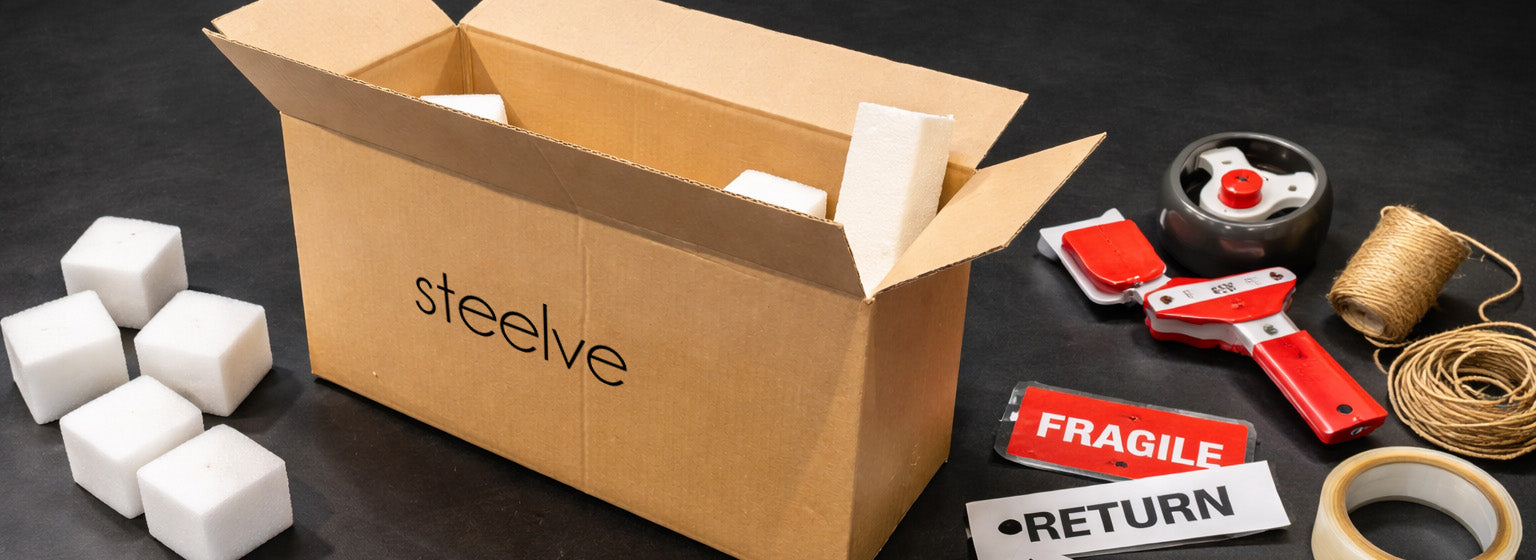
How to Pack and Secure a Return Shipment Properly
Returning a product doesn’t have to be complicated — but proper packing is essential.
Most return-related damage does not happen during the original delivery, but during the return shipment, when products are packed differently than intended.
This guide explains how to pack and secure a return shipment so the product arrives safely and can be processed without delays.
Why Proper Packing Matters
During transport, parcels are:
-
stacked with other shipments,
-
handled multiple times,
-
exposed to vibration, pressure, and impact.
If a product is not secured correctly, even a short journey can result in permanent damage.
Proper packing helps avoid:
-
additional damage during transport,
-
delays in return processing,
-
unnecessary back-and-forth communication.
Step 1: Use the Original Packaging Whenever Possible
The safest option is always the original packaging, as it was designed specifically for the product.
If you still have it:
-
use the original box,
-
keep all protective elements (foam, cardboard inserts, corner protectors),
-
place the product in the same orientation as it arrived.
If the original packaging is no longer available, use a strong, rigid cardboard box that allows space for proper internal protection.
Why Corners and Edges Require Extra Care
Many of our products are made from solid metal and consist of panels with clearly defined corners.
While this is part of their construction and design, it also means that these areas are especially vulnerable during transport if not packed correctly.
Based on our experience, around 99% of shipment damage cases are caused by improperly secured corners.
This is why correct corner protection is the single most important step when packing a return.
Step 2: Securing Corners, Edges Properly
When packing a return, always treat corners and sticking-out elements as priority points.
Best practices:
-
use cardboard corner protectors, foam bumpers, or folded thick cardboard,
-
protect each corner individually,
-
ensure protection fits tightly and cannot slide off.
If dedicated corner protectors are not available:
-
fold several layers of thick cardboard into an “L” shape,
-
place them firmly over the corners or edges,
-
secure them in place using tape over the protective material, not directly on the product surface.
Securing padding with tape
Padding should never be loose inside the box.
-
place padding directly around corners and protruding parts,
-
hold it firmly against the product,
-
use tape to fix padding and corner bumpers in position so they cannot shift during transport.
Tape should:
-
keep padding snug and stable,
-
prevent movement during vibration or impact,
-
always be applied over protective layers, never directly onto finished or coated surfaces.
Examples of Fragile Corners:

Step 3: Secure the Product Inside the Box
A properly packed return must not move inside the box.
Make sure that:
-
must not move freely inside the box
-
empty spaces are filled with padding,
-
all protective elements are fixed in place, not loose.
Padding placed next to the product without securing it will not prevent damage.
Step 4: Reinforce and Close the Box
Before sealing the shipment:
-
close the box securely,
-
tape all seams,
-
reinforce the bottom and edges if the product is heavy,
-
ensure the box maintains its shape when lifted.
A weak or damaged box significantly increases the risk of impact damage.
Step 5: Label the Shipment Clearly
Attach the return label securely and make sure:
-
all old shipping labels are removed or covered,
-
the label is flat and readable,
-
the box is fully sealed before handing it to the courier.
Final Stability Check (Highly Recommended)
Before sending the return:
-
Gently shake the box.
-
Listen and feel for any movement.
-
Pay special attention to corners and protruding parts.
If anything moves:
-
add more padding,
-
secure it again with tape,
-
repeat the check.
A stable package is the best indicator of safe transport.
Common Packing Mistakes to Avoid
-
insufficient protection of corners and edges
-
padding not secured in place
-
unprotected protruding parts
-
oversized boxes without filled empty space
-
assuming the courier will handle the parcel gently
Even experienced carriers cannot compensate for poor internal packing.
Summary
Proper return packing:
-
protects the product from damage,
-
speeds up return processing,
-
helps avoid unnecessary delays and disputes.
Focusing on panels with corners, securing padding and corner protection with tape, and fully immobilizing the product inside the box makes a real difference — for both the customer and the seller.


